
- Match the sharpener to the kind of steel and the angle of your knives.
- A guide holds the angle for you, which matters more than speed for a beginner.
- Read the maker’s page for which knives the sharpener is made for, and which it is not.
Start With Your Knives
Before you look at sharpeners, look at your knives. Most Western kitchen knives are sharpened at a wider angle than most Japanese knives, and a sharpener built for one can be the wrong choice for the other. Check the maker’s page for the recommended angle and steel type.
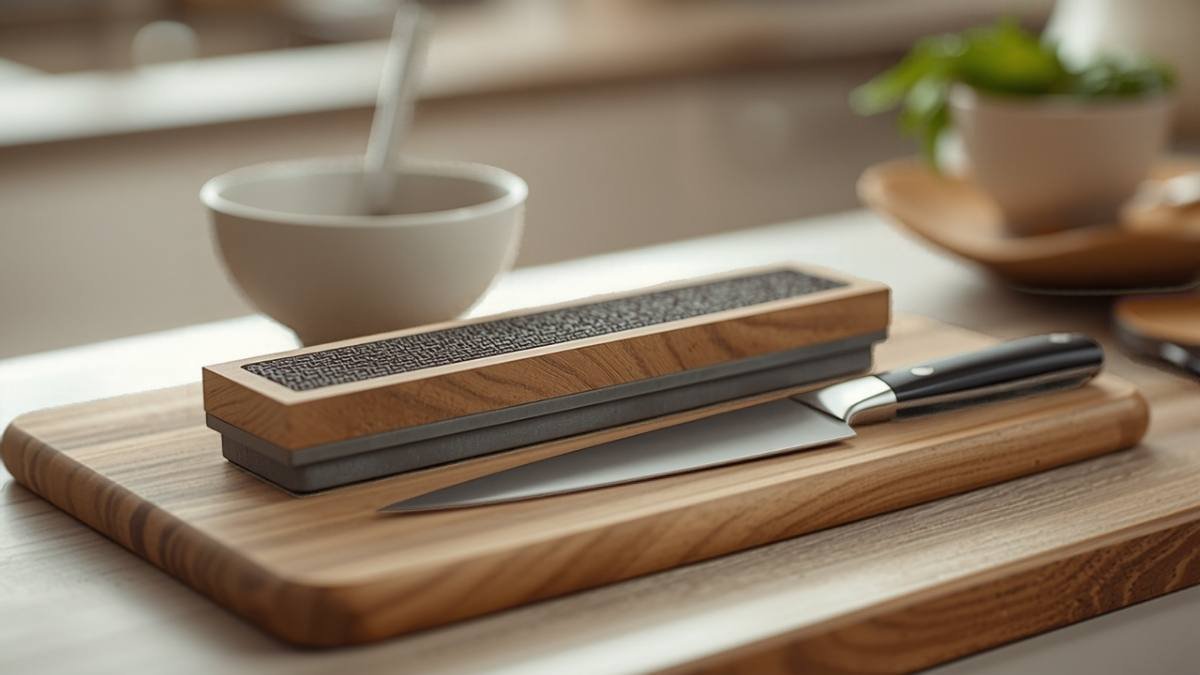
Compare the Three Main Types
Most home sharpeners fall into one of three groups. Here is how they differ in the ways that matter in a home kitchen.
| Type | Best for | Learning curve | Watch out for |
|---|---|---|---|
| Guided system | Beginners who want a repeatable angle | Low | Setup takes a few minutes |
| Electric sharpener | Quick touch-ups on everyday knives | Very low | Some remove more steel than needed |
| Whetstone | People who enjoy the craft and want control | High | Needs practice and a flat stone |
Three Example Sharpeners
These example cards show how each product will appear in a real guide: a short reason to choose it, what we like and what to watch for.
Example guided sharpening system
Adjustable angleClamp holds the knifeFine and coarse stones
Check it on Amazon →Choose this if you want the same angle every time without having to hold it by hand. The clamp keeps the knife still while you work.
Example electric sharpener
Built-in angle guidesSeveral stagesQuick to use
Check it on Amazon →Choose this if you want a sharper knife in a minute and don’t want to learn a new skill. Pull the knife through the guides and it does the rest.
Example two-sided whetstone
Coarse and fine sidesNon-slip baseSoak before use
Check it on Amazon →Choose this if you enjoy learning a craft and want full control over the edge. It takes practice but rewards patience.
Real-World Checks Before You Buy
- Check the angle. Find the angle your knives are meant to have and make sure the sharpener can match it.
- Check the steel. Very hard steels need the right abrasive. The maker’s page should say what the sharpener can handle.
- Count the steps. If the setup puts you off, you will not use it. Pick the one you will actually reach for.
Skip it if your knives are serrated or very cheap. Test a pull-through on one old knife first.
How to Keep Your Edge Between Sharpenings
- Use a wooden or plastic cutting board, never glass or stone.
- Hand-wash and dry your knives right after use.
- Hone with a rod now and then to keep the edge straight.
Frequently Asked Questions
How often should I sharpen my kitchen knives?
It depends on how often you cook. A good sign is when a knife starts to crush a tomato instead of slicing it.
Is a whetstone hard to use?
It takes practice to hold a steady angle, but many people learn the basics in a few sessions.
Can I use one sharpener for every knife?
Often not. Check the maker’s page for which knives and angles it is made for.
Our Verdict
If you are new to sharpening, a guided system is the safest place to start. An electric sharpener suits a busy kitchen, and a whetstone suits someone who wants to learn the craft. Read the maker’s page for your knives first.
Product facts come from each maker’s own page and can change, so the label on the item you buy has the final word.